Product Overview


Service electric and conventional vehicles with safe, stable access to the underbody. Our 2-post lift raises a four-wheeler to a comfortable working height, giving trainees clear access to suspension, brakes, drivetrain, battery mounting points, and underbody high-voltage cabling. Its symmetric arm design and locking system keep the vehicle secure while technicians work beneath it. Whether you are training service technicians, teaching automotive students, or equipping a workshop for EV and ICE service, this lift provides the stable platform that real-world underbody work demands.
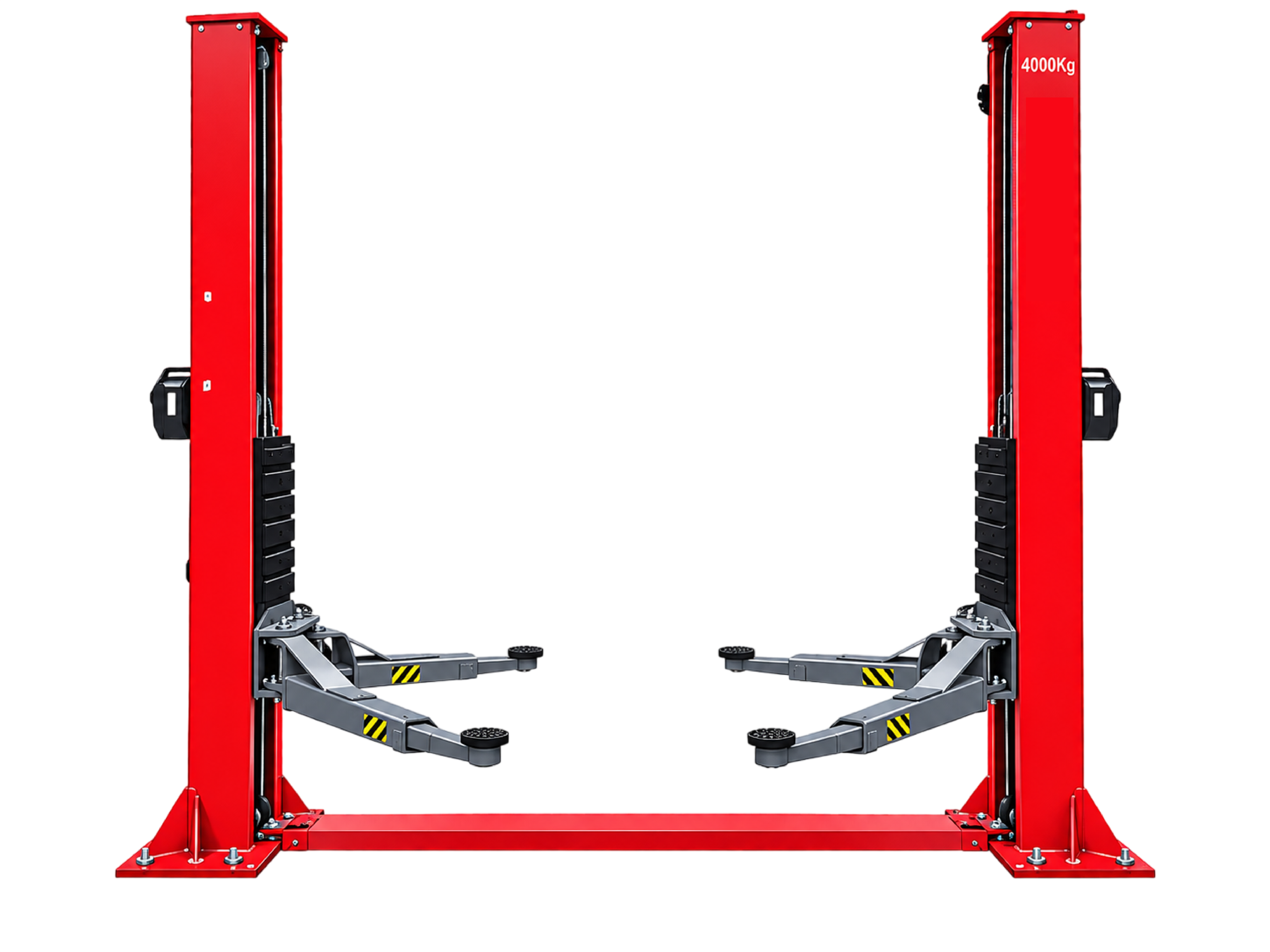

Product Specifications


Parameter

Specification

Product type

Two-post vehicle lift 

Lifting capacity

3.5 t to 4.0 t 

Maximum lifting height

1800 mm to 1900 mm 

Lift time

Approx. 40 to 60 seconds 

Column height

Approx. 2600 mm to 3000 mm 

Lifting arms

Adjustable, with rubber or polyurethane lifting pads

Vehicle wheelbase range

Approx. 2300 mm to 3500 mm

Locking system

Mechanical safety locks at every 100 mm interval 

Lift drive

Hydraulic cylinder with electric power unit

Release mechanism

Manual or electric safety release

Safety features

Mechanical locks, hydraulic safety valve, overload protection, anti-drop system

Power supply

380 V AC, three-phase, or 220 V AC, single-phase 

Motor rating

Approx. 2.2 kW to 3.0 kW

Installation

Floor-anchored, concrete floor required 

Finish

Powder-coated steel columns and arms

Certification

CE 

Key Experiments You Can Perform

  • Vehicle Positioning and Lifting Points

    Position a training vehicle, centering it on the lift and aligning the arms with the manufacturer’s lifting points. Learn how to identify correct pinch-weld and frame contact points, and why incorrect positioning can damage the vehicle or cause instability.

  • Lock Engagement and Load Check

    Raise the vehicle in controlled steps, engaging the mechanical locks at each interval. Verify that all locks are seated before anyone works underneath, and practice the lowering sequence with the release mechanism.

  • Underbody Inspection on a Lifted Vehicle

    With the vehicle secured, inspect the suspension, brake lines, drivetrain, and battery mounting points. Practice identifying wear, leaks, and loose fasteners, and record findings in a standard inspection checklist.

  • Emergency Lowering and Hydraulic Fault Response

    Simulate a hydraulic or power failure and practice the manual release sequence to lower the vehicle safely. Learn how to recognize abnormal lift behavior, when to stop work, and how to report the fault before the lift returns to service.